
Finding Ease in Life: Not Through 30 Tips, But Through This One Understanding
Jul 02, 2026
Ease in life – a longing many know. Yet for most people, it feels unreachable. In this article, I'll show you what true ease really means, how to recognize when you've lost it ... and how to reclaim it, step by step.
Table of Contents
- How do you know when you've lost your ease?
- Does the loss come suddenly – or gradually?
- What does ease in life really mean?
- Ease is not the same as carelessness
- Is joy of living the result of ease?
- Can you learn ease in life?
- Why journaling, meditation, and self-optimization often don't help
- How do you take life more lightly – without lying to yourself?
- What changes when you bring more ease into your life?
- What would you give to people who want to start now?
How do you know when you've lost your ease?
We all have this body – and it's perfectly built!
It orchestrates the many processes that make our life possible and keeps us in balance. But it's also connected to our mind and soul. It sends us constant signals to help us stay in the feeling of ease more often. And it always shows us when we're moving away from that ease toward heaviness and complexity.
Physical pain, anxiety, insomnia – these are all signals. Your body is telling you: You're moving away from ease and lightness, toward a heavier, more complicated state within.
When I lost my mother in 2004, I grieved – as we all grieve when we lose someone we love. My heart ached, and I was sad. That's normal in the grieving process. But I made something much bigger out of it. I made it a really heavy thing that I'd lost my mother. And a heavy thing that I would now spend the rest of my life without her.
My body's response: I developed severe pain in my left arm. That pain stayed with me for four long years. I lay in bed at night unable to sleep because the pain was so intense. I went to all kinds of doctors.
That's something many people do: They go to their GP with a complaint – tension in the back, shoulders, chronic exhaustion, all those things. Our bodies are perfectly built to tell us when we've left the path of ease and moved into tension and heaviness.
What usually comes before the physical signal: circling, constant thoughts. Something has gripped us – a situation, a supposed problem. We think about it again and again until it's no longer helpful. This circling thinking is often a clear sign that we're moving away from lightness.
(If this topic interests you more, check out my article on letting go of worry – I dive deeper into that process there.)
Does the loss of ease come suddenly, or gradually?
Both are possible. The loss of ease can come from a storm within – or from a storm in the outside world. Those are the two ways.
Let's say you lose your job and spend two years searching for a new one in a difficult job market. That would be an external storm in your life. And you see this external storm as a really big problem. But the storm itself from the outside isn't always the problem.
In my almost 52 years, I've experienced many deaths. I've learned that so much growth follows a person's death, so many gifts. So much good happens when someone dies – for your personal and spiritual growth. That's why it's no longer a problem for me today. The storm comes, but I don't see it as a problem. So I don't lose my ease.
To lose ease, you need an external storm and the belief that it's a problem. But there's also the inner storm: sudden, with no external cause.
I had a client who woke up one morning and whose brain told her overnight: "The color red is deadly." Her brain told her this so often that she took a red piece of clothing and threw it in the donation bin. She couldn't use a red pen anymore, even though she was an artist. She avoided the color red at all costs. Man, that was a heavy experience for her. Really.
And then there are habits that creep in.
Imagine you've got your smartphone and you're interested in fitness. The algorithm shows you more and more ripped bodies, flat stomachs, protein shakes and supplements. And the longer you watch, the more you compare yourself to what you see on the screen.
After twelve months, you've developed a creeping habit of comparing yourself – from what was actually a healthy motivation – and that has accumulated into a feeling of heaviness.
What does ease in life really mean?
Sydney Banks, the enlightened Scottish teacher who discovered the Three Principles and on whose foundation I base my coaching, once said: "Life is a full-contact sport." Things happen constantly – both within us and outside in our circumstances. That's how life works.
Last year, I faced people in my close circle being diagnosed with dementia and cancer and dying, my dog suddenly declining and having to be put to sleep, people losing their livelihood. Trump is now in power. He has just initiated a war with Iran. Do you see what I'm pointing to? Things are constantly happening.
For me, ease means: All these things stay the same. You have all these challenges or see problems everywhere you look. But the way you approach these things is connected to ease and lightness. Your relationship to external challenges and inner experiences transforms.
An example: Sometimes I lie in bed at night, and my hormones go crazy (hello perimenopause!). I suddenly feel this awful anxiety and adrenaline rush coursing through my veins and can't calm my system. Now I can see this as a real problem. Or I simply recognize it as an experience I'm having right now – and stay neutral about it.
Or my young dog (he's not even a year old yet) recently jumped onto the kitchen counter while we weren't paying attention, stole an entire pizza box, and ate a whole pizza by himself. As her dog mom, my first reaction was, "Oh God, were there onions on it?" Was there something that could hurt her? Ease also means: being as concerned as necessary to help with the situation. So I researched which ingredients are harmful to dogs. And then: let it go completely.
That experience happened. Fine. Stay present in the moment, stay calm, stay neutral.
Moving through life with ease and lightness, without being thrown off course by your experiences – that's the truest definition for me.
When we move through life this way – accepting what comes, allowing what is – something shifts. We preserve our joy of living. Gratitude and equanimity follow naturally.
Ease is not the same as carelessness – or is it?
Carelessness is an experience you can have. Being worried and being carefree – those are just experiences. They're not the same as ease.
When my mother-in-law was seriously ill – with dementia and lung cancer – there were days when I worried. How will this go? Can we help her? What should we do next?
But when my relationship with that worry experience is healthy, I tell myself: "Okay, today I'm worried." That's my current experience. I'm a normal person, and I worry sometimes. No problem, it will pass.
Ease means: letting that experience be as it is and simply letting it go again. Not making such a big deal out of it. Holding it all lightly.
Is joy of living the result of ease?
Our natural baseline state is joy, love, peace, joy of living, aliveness. Those are, so to speak, our factory settings. Like with a new car: It comes with air conditioning, parking assist, and navigation. That's the standard. You already have it.
You see it in small children. When they're born healthy, they already radiate joy of living. They laugh at everything. So when we're in a state of ease with everything we experience, we naturally fall back to our baseline. And because joy of living is our baseline, we simply find ourselves there more often – when we take things lightly.
Imagine you're a stay-at-home dad and you've had a really frustrating day with your kids. But you're doing it with ease: "Today I'm frustrated; I could just about tear my own hair out. That's totally OK." With that lightness around the experience, you'll still have more joy of living – with yourself and with your kids, even if they're getting on your nerves right now.
Can you learn ease in life?
In the Three Principles community, there's a thing we like to say:
There is nothing to do, but something to see.
The idea is: if you try to be at ease, you've missed the point. It's about recognizing deeply for yourself that you're having a human experience here on this planet – and you can resist that experience, you can fear it, or you can meet it with ease and grace.
When you really see that, you don't need to practice it. That's what I truly believe. Some people don't see it that deeply yet. It hasn't reached their bones.
What does it mean to "see it deeply"?
For many people, this begins with small moments – moments when you notice: "Oh, I'm worrying unnecessarily right now" or "I'm taking this too seriously." These tiny insights accumulate. With each realization, you understand more and more that you have a choice – that you can approach things with ease, even when they seem heavy. This insight grows until it simply becomes natural within you. Then you don't need practice anymore; it just happens.
Maybe people who don't yet have this deep realization need to remind themselves in everyday life that they can approach things with ease – that's then a form of practice. But as a coach, I'd always rather have someone see it deeply, so it simply happens naturally.
Why do journaling, meditation, and self-optimization often not help on the path to more ease?
When someone wants to keep a happiness journal, I say: "Do it." But personally, I prefer not having to do anything. I'm lazy – I don't want to have to practice methods.
If it helps you to write something down for a while until it sits deeper within you – and that's really your inner wisdom guiding you from within – then I'd say: "Do it." But I would never recommend journaling to a client as homework.
Sometimes someone says in coaching: "I hear you, I'm going to practice this week." Then I say: "You haven't understood yet." If you'd really seen it, you wouldn't be trying to force yourself to do something. So we need to talk about it again.
How do you take life more lightly – without lying to yourself or suppressing problems?
My own mother worked at Walmart in the USA in her final years. There was a handbook there: Always smile, always be friendly, always look happy. Research shows that retail employees who practice forced positivity suffer from emotional dissonance and burnout (Hochschild, The Managed Heart: Commercialization of Human Feeling, 1983). It makes you sick. You show something on the outside that you don't feel on the inside.
That's not ease for me. That's incongruence – and a very unhealthy state. You never have to force yourself to feel something you don't feel. Just feel what you feel. If it's sadness, then be sad. Feel it. But don't take it too seriously and let it go again.
You don't have to force yourself to feel something you don't feel. Just feel what you feel. If it's shame, if it's sorrow – then be with it, feel it, let it be embodied in you. But still don't take it too seriously and let it go again.
That's one of the keys to ease: understanding that you live in a fluid experience. In one moment you have fear and worry, in the next calm and happiness. You're constantly moving through waves of emotions. Being present with each one is important. But also not taking them too seriously and letting them flow – letting them move through you with lightness.
Ease doesn't mean having no difficult feelings. It means not making drama out of them.
What changes when you bring more ease into your life?
So much would change – not just for you, but for everyone around you.
If more people moved through life in a state of ease – in that lightness toward what they experience – we'd be so much healthier as a society.
So much less stress. So many bodies that wouldn't have to cry out: Help me, come back from your thoughts where everything is so important.
People would have less high blood pressure, less obesity, less fibromyalgia, less chronic exhaustion. I really believe that the majority of diseases come from us innocently falling out of our ease into a heavy state.
And our relationships would improve.
When my mother-in-law was very ill: If I had gone to her in worry and heaviness… and taken it all seriously, I would have separated myself from myself and from her. I wouldn't have been any help in that moment. But when I went to her with ease and lightness – I could be with her, we could find a feeling of love together, and I was much more present.
For me, ease in life is one of the core elements that creates health, clarity, and connection in human life.
What would you give to people who want to start now?
Ease in life is a journey. I almost feel that's why we're here at all – to grow in this space of ease and lightness.
You won't necessarily get it from reading this article. Maybe you will – sometimes someone has an aha moment and thinks: "Boom, I've got it!" But for most people, it's a small crack, a tiny fissure, through which you consider the possibility: I can stay at ease and light in every experience life gives me – whether from within or without. And that's what my clients and I always look toward.
Because the more you look in that direction, the more you'll recognize it.
I had a client I sent a book to by Michael Neal: The Space Within. She read it, fell asleep with the open book on her chest, woke up, read a single line – and suddenly her life had changed. That can happen. But for most people, it's a journey you embark on, like a ship setting out on water.
Be patient with yourself. You see what you see when you see it. And that's exactly right.
Exploring ease further
The ease and lightness described in this article are not theoretical concepts – they're experiences you can live. Here are three ways to go deeper:
🎙️ Listen to the podcast
The Leichter Leben podcast accompanies you in deep conversations about these topics. How to release worry, find your inner clarity, reconnect with yourself, and move through life with ease. These are moments where the philosophy of ease truly comes alive – not just theoretically, but as an experience you can hear. (German language)
Listen to all episodes →📖 Explore related articles
If this article has moved you, these pieces might offer you further perspectives:
- Stop Worrying: What a Widow in Uganda and a Millionaire Have in Common — How to free yourself from thought spirals and find ease again
- You've Lost Yourself? Here's How to Find Your Way Back — Ease begins with authenticity. Discover how to reconnect with yourself
- Finding Calm in Everyday Life: 6 Things People at Ease Do Differently — What ease and grace actually look like in daily life
💬 In a 1:1 conversation
Sometimes it helps not just to understand ease, but to experience it for yourself. A coaching conversation can show you how these principles work concretely in your life – where you can move with ease right now and where you're making things unnecessarily heavy.
Schedule a call →Common questions about ease in life
What does ease in life mean?
Ease in life means having a relaxed, open attitude toward the experiences life brings – without turning them into drama and without clinging to them. It's not about having no problems; it's about how you relate to them. Ease is an inner quality, not an outer situation.
How do I get more ease in my life?
Getting more ease into your life begins with recognizing: Your experiences – whether beautiful or difficult – don't define you and don't have to become a problem. It's not a technique you practice; it's an insight you gain. Sometimes a conversation with a coach who has an inside-out perspective helps. Often it just takes time, inner quiet, and willingness to see things differently.
Is ease the same as carelessness?
No. Ease in life doesn't mean having no worries or suppressing problems. It means having a healthy relationship with your experiences – feeling them, letting them be, and releasing them again, without sinking into heaviness permanently. You can be worried and at ease at the same time. That's the difference.
About Shailia Stephens
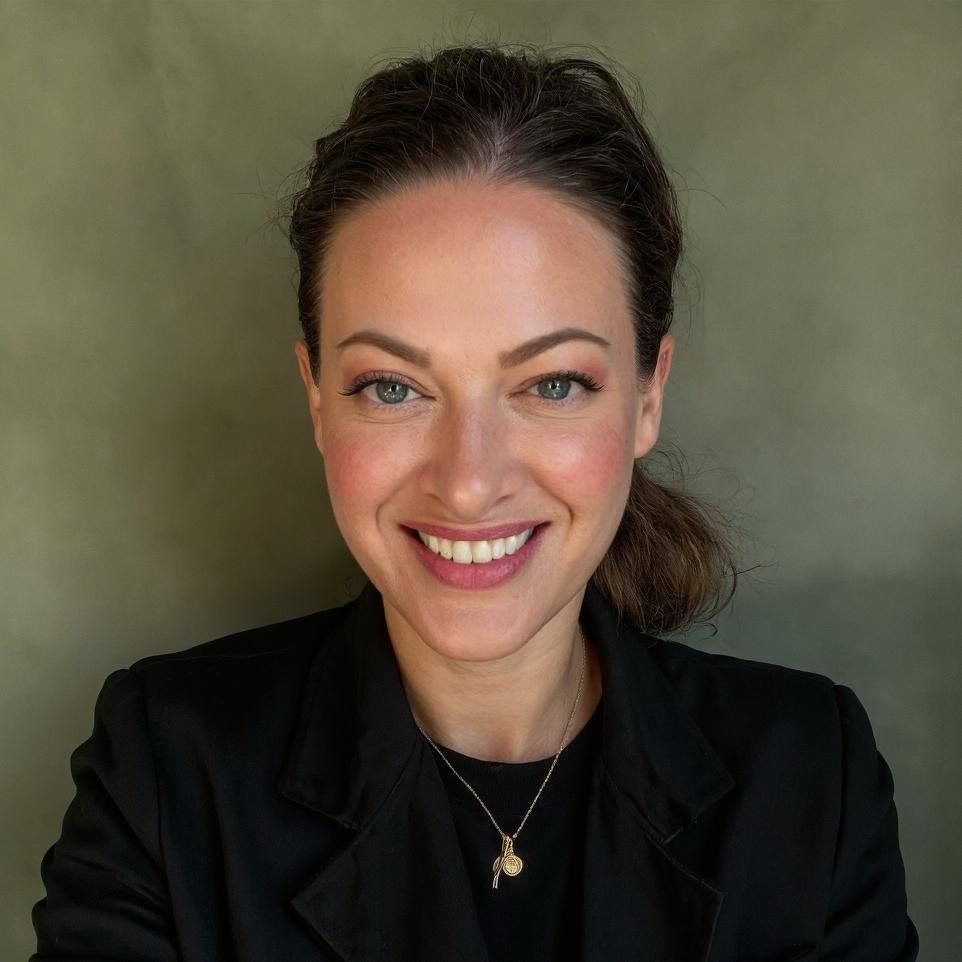
Shailia Stephens is a Life Coach and Business Coach working on the foundation of the Three Principles after Sydney Banks. She accompanies people in finding their way back to themselves, bringing more ease into their lives, and leading authentically – from leaders and entrepreneurs in Germany to women in refugee camps in Uganda. Her work is based on the conviction that real change comes from within – not through more tips and techniques, but through a deeper understanding of how our inner experience works.
Mein geheimes Leben
Etwas stimmt mit mir nicht.
In 21 Gesprächen teilen Coaches und Menschen wie du das, was sie lange verborgen hielten. In dieser Interview-Serie erfährst du, welche Einsichten ihr Leben verändert haben – und warum du mit deinen Ängsten und Zweifeln nicht allein bist.
Vielleicht gibt es etwas Neues zu sehen, das alles für dich verändert!
Bleib in Verbindung.
Bleib nah dran. 📩
Von Zeit zu Zeit teile ich Gedanken zum Leben, zur Führung und zum Business in meinem Newsletter. Wenn du meine Lighter Life Letters in deinem Postfach lesen möchtest, freue ich mich, wenn du dich dafür registrierst.
